
Encouraging prayer and mobilising workers for the Diaspora in Europe
“Suneel, this lady wants us to pray for her…”
We were just about to leave the Gurudwara in Barcelona, when one of our group brought us someone she’d started chatting to. But why were we there? Suneel Shivdasani explains the diaspora research that he and Thomas Hieber are doing.
In 2017 South Asian Concern produced its first Diaspora report of South Asian communities in mainland Europe, focusing on Italy. At the time there were an estimated 500 700,000 South Asians in the country, largely untouched by the church. Thomas Hieber researched the communities and provided comprehensive details of the people and their places of worship to mobilize prayer and encourage agencies to mobilize workers for them.
In 2018 we began producing similar reports for Spain. We were in Barcelona, visiting local Asian communities to learn about them and also contacting local churches and mission agencies. One of the local mission leaders was about to run a session on outreach in his local church. We offered to take them to the Gurudwara as a practical session instead. Some of the group were initially quite reticent, but they decided to come, and that’s when we met the lady mentioned above.
As before, our reports were aimed at mobilising prayer and workers, but we discovered that we could also help local churches to engage while we were there.
The response to the reports was positive:
“This report is a marvellous resource for anyone interested in discovering more about this large unreached and unnoticed people group in Spain (and throughout Europe!)…. The growing number of South Asians in Spain has been largely unseen by believers and remains unengaged by the majority of churches and missions serving in the country… “
Jerry K, CMA Regional Director for Europe – comment on ‘SAC – South Asians in Spain report, Nov 2018’
Furthermore, the reports on Spain and the Canary Islands played a significant role in encouraging the formation of the Lausanne Sikh Partnership, beginning with a consultation in 2019, followed by the annual ‘Five Days Prayer for Sikhs’ in the spring of each year.
Currently we are working on research projects for The Netherlands, Portugal and Belgium. Having seen the opportunities provided on previous trips, this time we are intentionally seeking to take local church members to visit these communities, to help them make “first contact”, and then encourage and support them to continue to engage with those they meet.
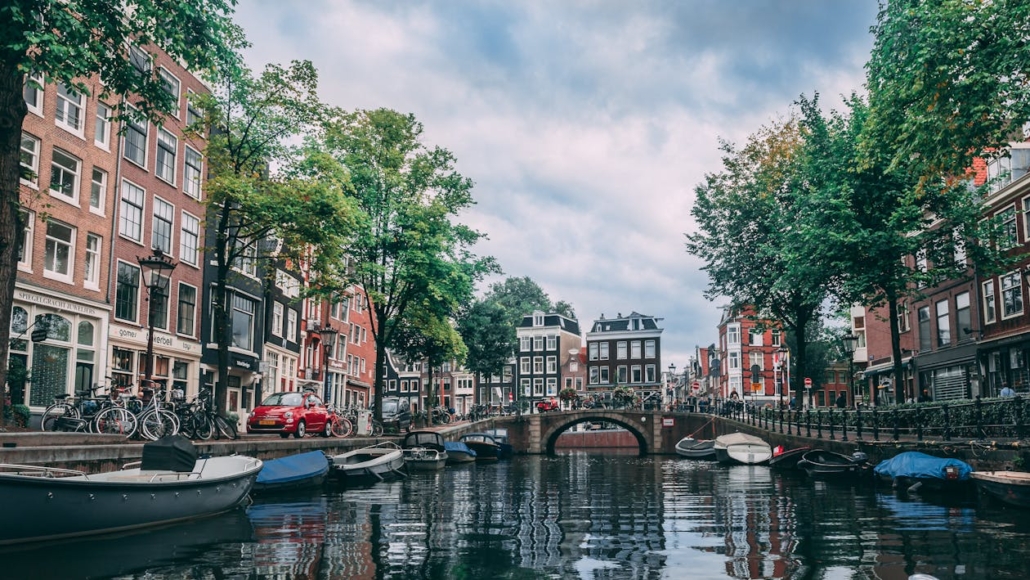
Our first trip is this autumn, to the Netherlands. We have had regular prayer calls and God has already given us a number of contacts, including a missionary in Rotterdam, who is raising prayer for unreached communities locally. Hanna Mitra Rambaran, a Surinamese Christian (from a Hindu background) is running a conference on community needs at that time and has invited us to participate.
Please pray that God would help us with the research, and that through the project, local church members would make strong contacts with these communities so that in time God’s kingdom is established amongst them. Please also pray that the conference is successful in helping Surinamese women voice their neglected needs, and that practical solutions are found to the problems being raised. As for the lady in the Gurudwara, after a short conversation we were able to lead her in a prayer to Jesus for her need.
Miti Dey: Bribi ini Miti ‘Belief in Meeting’ is a Conference about Women’s Rights in Suriname and The Netherlands, on Friday 25th November 2022
Hanna Mitra explains: “Miti Dey means ‘day of meeting’ in the common Surinamese language which almost everyone in Suriname can understand and speak. It is the language that connects the many ethnic groups that inhabit Suriname. The other languages used are translations in Dutch, Surinamese Hindi and Javanese.
The aim of the conference is to present the Surinamese community (both in Suriname and in the Netherlands) in all its variety in cultures through serious and neglected topics within Women’s Rights – such as domestic violence and menstrual poverty.”


